Product Introduction
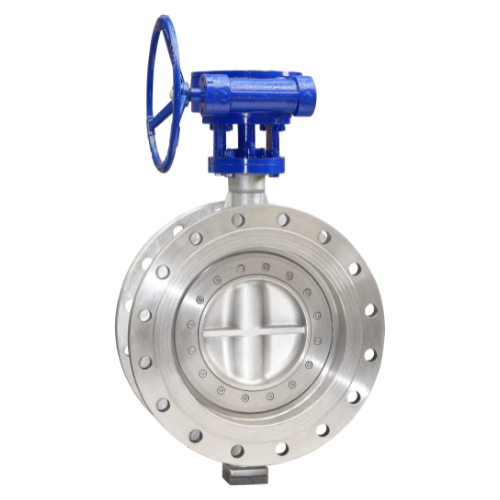
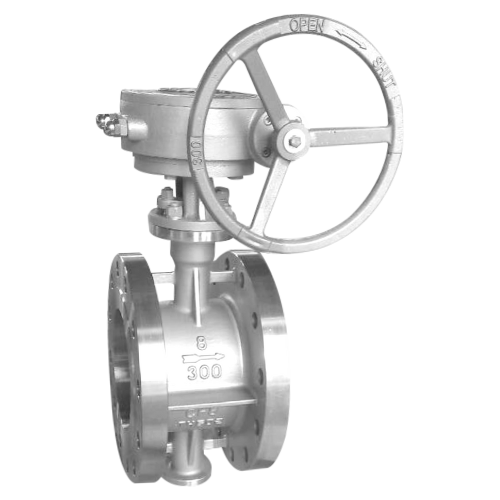
Worm Gear Stainless Steel Butterfly Valve Overview
Worm gear stainless steel butterfly valves combine corrosion-resistant stainless steel construction with a worm gear operator for precise flow control. These valves are widely used in water treatment, chemical processing, and food & beverage industries due to their durability and hygienic properties.
Technical Specifications
Feature Description
Body Material Stainless Steel (304, 316, CF8, CF8M) for corrosion resistance
Disc Material Stainless Steel (304/316), Aluminum Bronze
Seat Material EPDM, NBR, PTFE, or Metal Seals for tight sealing
Connection Type Flanged (ANSI, DIN, JIS standards)
Size Range DN50-DN1200 (2"-48")
Pressure Rating PN10-PN25 (ANSI 150-300)
Temperature Range -20°C to +180°C (wider ranges available for special materials)
Operation Worm Gear Operator (Manual), with optional electric/pneumatic actuation
Flow Characteristics Linear or Equal Percentage (depending on disc design)
Leakage Class ANSI Class IV (soft seat) or Class VI (metal seat)
Standards API 609, ISO 5752, EN 593, AWWA C5044
Key Features
✔ Corrosion Resistance – Ideal for aggressive media
✔ Precise Control – Worm gear ensures accurate flow regulation
✔ Hygienic Design – Smooth surfaces for easy cleaning (sanitary applications)8
✔ Low Maintenance – Durable construction for long service life
✔ Bidirectional Sealing – Effective in both flow directions
Typical Applications
Water & Wastewater Treatment
Chemical & Pharmaceutical Processing
Food & Beverage Industry (Sanitary-grade valves available)
HVAC & Industrial Piping Systems
For detailed dimensional data and material certifications, refer to API 609 standards or manufacturer specifications.
What is a butterfly valve?
A butterfly valve is a quarter-turn rotational motion valve used to regulate or isolate fluid flow. It consists of a circular disc or vane that pivots at a right angle to the direction of flow, allowing for quick operation and control.
What are the main applications of butterfly valves?
Butterfly valves are commonly used in water treatment, HVAC systems, chemical processing, food and beverage industries, and fire protection systems. They are suitable for handling liquids, gases, and slurries.
What are the advantages of using a butterfly valve?
Compact and lightweight design.
Quick and easy operation.
Lower cost compared to other valve types.
Minimal pressure drop when fully open.
Suitable for large diameter pipelines.
What are the different types of butterfly valves?
Wafer-style: Fitted between two flanges and held in place by bolts.
Lug-style: Has threaded inserts (lugs) for bolt connections, allowing one side to be disconnected without affecting the other.
Double-flanged: Has flanges on both ends for bolting to piping systems.
Triple-offset: Designed for high-performance applications with tight shut-off and minimal wear.
How do I select the right butterfly valve for my application?
Consider factors such as the type of fluid, pressure and temperature requirements, flow rate, valve size, material compatibility, and the need for automation (manual, electric, or pneumatic actuation).
What maintenance is required for butterfly valves?
Regular inspection of the disc, seat, and seals for wear or damage is essential. Lubrication of the stem and actuator (if applicable) may be required. Ensure proper alignment and avoid over-tightening during installation to prevent leaks or operational issues.