Product Introduction
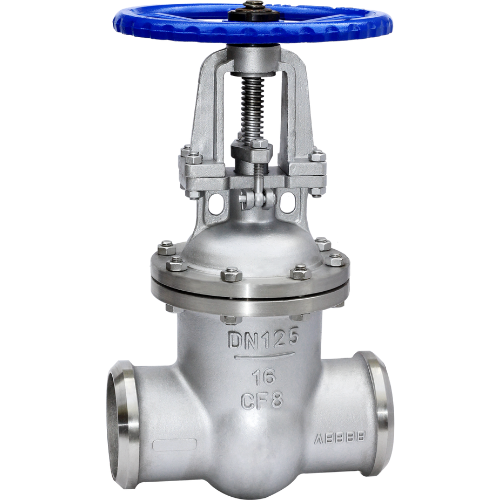
Welded Gate Valve Overview
Welded gate valves are designed for permanent installation in pipelines where leakage prevention and high integrity are critical. They are welded directly to the pipeline, eliminating the need for flanges or threaded connections. These valves are commonly used in high-pressure and high-temperature applications, such as oil and gas, power plants, and chemical industries.
Welded Gate Valve Features
Feature Description
Connection Type Welded ends (butt weld or socket weld) for a permanent, leak-proof connection.
Body Material Carbon steel, stainless steel, or alloy steel for durability and strength.
Temperature Range Suitable for high temperatures, typically up to 425°C (800°F) or higher.
Pressure Rating High-pressure applications, commonly ANSI 150 to 2500 or higher.
Sealing Metal-to-metal or soft seats (e.g., PTFE, graphite) for tight sealing.
Applications Oil and gas pipelines, power plants, chemical processing, and refineries.
Advantages Leak-proof, high strength, suitable for extreme conditions, and low maintenance.
Disadvantages Permanent installation, difficult to repair or replace.
Standards Compliant with API, ANSI, ASME, and DIN standards.
For more detailed specifications, refer to manufacturer datasheets or industry standards like API 602 for compact welded gate valves and ASME B16.34 for valve design.
What is a gate valve?
1-A gate valve is a type of valve used to control the flow of fluid in a pipeline. It operates by lifting a gate or wedge out of the path of the fluid, allowing for full flow or complete shut-off.
2-What are the main applications of gate valves?
Gate valves are commonly used in applications where a straight-line flow of fluid and minimum restriction is desired, such as in water supply systems, oil and gas pipelines, and industrial processes.
3-Can gate valves be used for throttling purposes?
No, gate valves are not designed for throttling. They are intended to be either fully open or fully closed. Using a gate valve for throttling can cause damage to the valve and reduce its lifespan.
4-What are the different types of gate valves?
Gate valves come in various types, including rising stem, non-rising stem, solid wedge, flexible wedge, and split wedge. Each type is suited for specific applications and operating conditions.
5-How do I maintain a gate valve?
Regular maintenance of a gate valve includes inspecting for leaks, ensuring the valve operates smoothly, and lubricating the stem and other moving parts. It’s also important to check for corrosion or wear and replace any damaged components.
10-What are the advantages of using a gate valve?
Gate valves offer several advantages, such as low fluid resistance, tight sealing when closed, and the ability to handle high-pressure and high-temperature applications. They are also relatively simple in design and easy to operate. If you have more questions or need assistance, feel free to contact us!