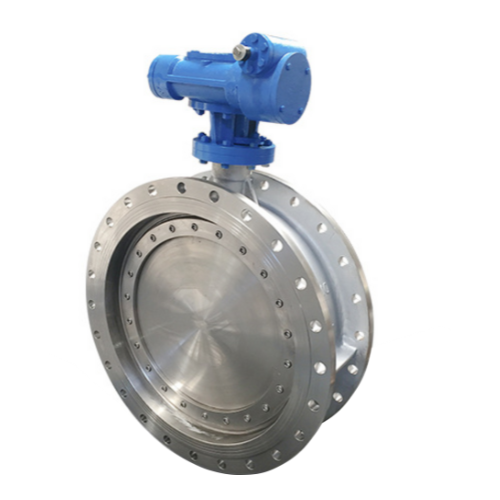
Product Introduction
Hard Seal Flange Butterfly Valve Overview
Hard seal flange butterfly valves are designed with metal-to-metal sealing surfaces, making them ideal for high-temperature, high-pressure, and abrasive applications. They feature flanged ends for easy installation and are widely used in power plants, chemical processing, and oil and gas industries.
Hard Seal Flange Butterfly Valve Features
Feature Description
Body Material Carbon steel, stainless steel, or alloy steel for durability and strength.
Sealing Material Metal-to-metal (e.g., stainless steel, carbide) for high durability.
Temperature Range Suitable for extreme temperatures, typically -29°C to 600°C (-20°F to 1112°F).
Pressure Rating High-pressure applications, commonly ANSI 150 to 600.
Sealing Metal-to-metal sealing for tight and reliable performance.
Applications Power plants, chemical processing, oil and gas pipelines, and abrasive fluid systems.
Advantages High durability, suitable for extreme conditions, and long service life.
Disadvantages Higher cost compared to soft-sealed butterfly valves.
Standards Compliant with API 609, AWWA C504, and ISO standards.
For more detailed specifications, refer to manufacturer datasheets or industry standards like API 609 for butterfly valves and ASME B16.34 for valve design.
What is a butterfly valve?
A butterfly valve is a quarter-turn rotational motion valve used to regulate or isolate fluid flow. It consists of a circular disc or vane that pivots at a right angle to the direction of flow, allowing for quick operation and control.
What are the main applications of butterfly valves?
Butterfly valves are commonly used in water treatment, HVAC systems, chemical processing, food and beverage industries, and fire protection systems. They are suitable for handling liquids, gases, and slurries.
What are the advantages of using a butterfly valve?
Compact and lightweight design.
Quick and easy operation.
Lower cost compared to other valve types.
Minimal pressure drop when fully open.
Suitable for large diameter pipelines.
What are the different types of butterfly valves?
Wafer-style: Fitted between two flanges and held in place by bolts.
Lug-style: Has threaded inserts (lugs) for bolt connections, allowing one side to be disconnected without affecting the other.
Double-flanged: Has flanges on both ends for bolting to piping systems.
Triple-offset: Designed for high-performance applications with tight shut-off and minimal wear.
How do I select the right butterfly valve for my application?
Consider factors such as the type of fluid, pressure and temperature requirements, flow rate, valve size, material compatibility, and the need for automation (manual, electric, or pneumatic actuation).
What maintenance is required for butterfly valves?
Regular inspection of the disc, seat, and seals for wear or damage is essential. Lubrication of the stem and actuator (if applicable) may be required. Ensure proper alignment and avoid over-tightening during installation to prevent leaks or operational issues.