Product Introduction
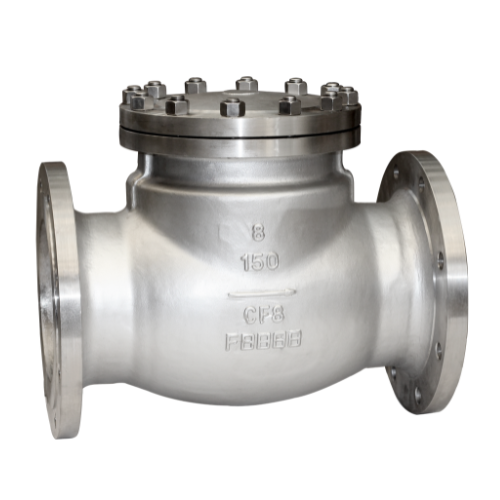
GB Swing Check Valve Overview
GB Swing Check Valves are designed according to Chinese national standards (GB standards). They feature a hinged disc that swings open to allow forward flow and closes to prevent backflow. These valves are widely used in water, steam, and oil systems for their simple design and reliable performance.
GB Swing Check Valve Features
Feature Description
Standards Complies with Chinese GB standards (e.g., GB/T 12236).
Body Material Carbon steel, stainless steel, or alloy steel for durability.
Temperature Range Suitable for moderate to high temperatures, typically -29°C to 425°C (-20°F to 800°F).
Pressure Rating Medium to high-pressure applications, commonly PN16 to PN100.
Sealing Metal-to-metal or soft seats (e.g., PTFE, EPDM) for tight sealing.
Applications Water systems, steam systems, oil and gas pipelines, and industrial processes.
Advantages Simple design, low pressure drop, and reliable performance.
Disadvantages May cause water hammer in high-pressure systems.
Connection Types Flanged, threaded, or welded ends for versatile installation.
For more detailed specifications, refer to manufacturer datasheets or Chinese national standards like GB/T 12236 for swing check valves.
1. What is a check valve?
A check valve is a type of valve that allows fluid to flow in one direction only, preventing backflow. It operates automatically, opening when fluid flows forward and closing when flow reverses.
2. What are the main applications of check valves?
Check valves are used in a wide range of applications, including:
Water and wastewater systems
Oil and gas pipelines
Chemical processing
HVAC systems
Power plants
Pump and compressor systems
3. What are the different types of check valves?
Common types of check valves include:
Swing Check Valve: Uses a hinged disc to allow or block flow.
Lift Check Valve: Uses a piston or ball to control flow.
Ball Check Valve: Uses a ball to seal against a seat.
Dual Plate Check Valve: Uses two spring-loaded plates for quick closure.
Wafer Check Valve: Compact design for space-saving installations.
4. What are the advantages of check valves?
Prevents backflow and protects equipment.
Operates automatically without manual or external control.
Available in various designs for specific applications.
Low maintenance and long service life.
5. What are the disadvantages of check valves?
Not suitable for throttling or flow regulation.
May cause water hammer in some designs (e.g., swing check valves).
Requires proper installation orientation to function correctly.
6. How do I select the right check valve?
Consider the following factors when selecting a check valve:
Flow rate and pressure: Ensure the valve can handle the system's flow and pressure requirements.
Fluid type: Choose materials compatible with the fluid (e.g., stainless steel for corrosive fluids).
Installation orientation: Check valves must be installed in the correct orientation (vertical or horizontal).
Size and type: Select the appropriate size and type based on the application (e.g., swing check for low-pressure systems, dual plate for high-pressure systems).
These FAQs provide a basic understanding of check valves and their applications. For more detailed information, consult manufacturer specifications or industry standards like API 594 or ASME B16.34.
6. What are the different types of globe valves?
Globe valves come in three main body designs:
Tee Pattern (Z-body): High pressure drop, used for throttling.
Angle Pattern: Changes flow direction by 90 degrees, reduces pressure drop.
Wye Pattern (Y-body): Low pressure drop, suitable for high-flow applications.
These FAQs provide a basic understanding of globe valves and their applications. For more detailed information, consult manufacturer specifications or industry standards like API 602 or ASME B16.37.