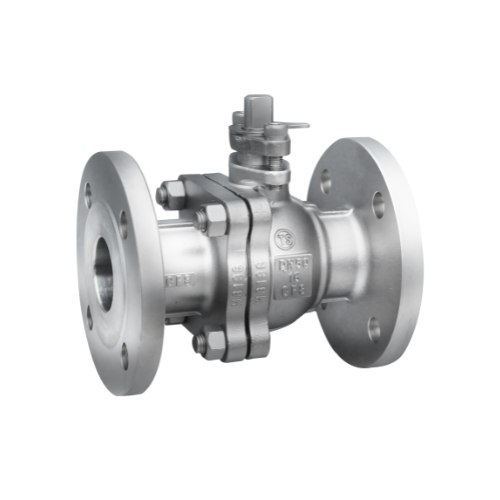
Product Introduction
GB Flanged Ball Valve Overview
GB Flanged Ball Valves are designed according to Chinese national standards (GB standards). They feature flanged ends for easy installation and are widely used in water, oil and gas, and industrial systems for reliable flow control.
GB Flanged Ball Valve Features
Feature Description
Standards Complies with Chinese GB standards (e.g., GB/T 12237).
Body Material Carbon steel, stainless steel, or alloy steel for durability.
Temperature Range Suitable for moderate to high temperatures, typically -29°C to 200°C (-20°F to 392°F).
Pressure Rating Medium to high-pressure applications, commonly PN16 to PN100.
Sealing Soft seats (e.g., PTFE, EPDM) or metal-to-metal for tight sealing.
Applications Water systems, oil and gas pipelines, chemical processing, and industrial systems.
Advantages Reliable performance, easy installation, and compliance with GB standards.
Disadvantages Limited to markets following Chinese standards.
Connection Types Flanged ends for secure and leak-proof installation.
For more detailed specifications, refer to manufacturer datasheets or Chinese national standards like GB/T 12237 for ball valves.
1. What is a b1. What is a ball valve?
A ball valve is a type of quarter-turn valve that uses a hollow, perforated, and pivoting ball to control the flow of fluids. When the ball's hole is aligned with the flow, the valve is open; when it is perpendicular, the valve is closed.
2. What are the main applications of ball valves?
Ball valves are widely used in various industries, including:
Water and wastewater systems
Oil and gas pipelines
Chemical processing
HVAC systems
Food and beverage production
Pharmaceutical manufacturing
3. What are the different types of ball valves?
Common types of ball valves include:
Floating Ball Valve: The ball is held in place by two sealing rings.
Trunnion Ball Valve: The ball is supported by a trunnion for high-pressure applications.
Full Port Ball Valve: The ball's hole is the same size as the pipeline for minimal flow restriction.
Reduced Port Ball Valve: The ball's hole is smaller than the pipeline, causing a slight flow restriction.
V-Port Ball Valve: The ball has a V-shaped hole for precise flow control.
4. What are the advantages of ball valves?
Quick and easy operation (quarter-turn).
Tight sealing with minimal leakage.
Suitable for high-pressure and high-temperature applications.
Durable and low maintenance.
5. What are the disadvantages of ball valves?
Not ideal for throttling applications (except V-port ball valves).
Can trap fluids in the ball cavity, which may cause issues in certain applications.
Higher cost compared to some other valve types (e.g., gate valves).
6. How do I select the right ball valve?
Consider the following factors when selecting a ball valve:
Flow rate and pressure: Choose the appropriate size and pressure rating.
Fluid type: Select materials compatible with the fluid (e.g., stainless steel for corrosive fluids).
Operation type: Manual, electric, or pneumatic actuation.
Port type: Full port for minimal restriction or reduced port for cost savings.
Standards: Ensure compliance with industry standards like API, ANSI, or ISO.
These FAQs provide a basic understanding of ball valves and their applications. For more detailed information, consult manufacturer specifications or industry standards like API 6D or ASME B16.39.