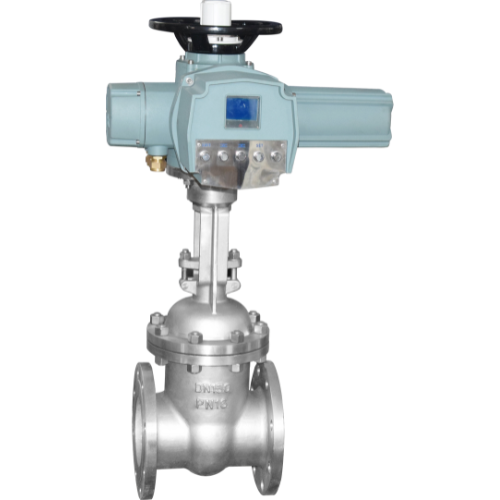
Product Introduction
Electric Gate Valve Overview
Electric gate valves are automated valves that use an electric actuator to control the opening and closing of the valve. They are widely used in remote or automated systems where manual operation is impractical. These valves are ideal for applications in water treatment, oil and gas, power plants, and industrial processes.
Electric Gate Valve Features
Feature Description
Actuation Electric motor-driven actuator for automated operation.
Operation Can be fully open, fully closed, or set to specific positions (if supported).
Control Can be integrated with control systems (e.g., PLC, SCADA) for remote operation.
Materials Body: Cast iron, stainless steel, brass. Seals: EPDM, PTFE, or NBR.
Applications Water supply, HVAC systems, oil and gas pipelines, industrial automation.
Voltage Options Common voltages: 24V, 110V, 220V, 380V AC/DC.
Advantages Remote operation, precise control, low maintenance, and energy-efficient.
Disadvantages Higher initial cost compared to manual valves, requires power supply.
Standards Compliant with ISO, API, ANSI, or DIN standards.
For more detailed specifications, refer to manufacturer datasheets or industry standards like ISO 5211 for mounting dimensions and IEC 60534 for industrial process control.
What is a gate valve?
1-A gate valve is a type of valve used to control the flow of fluid in a pipeline. It operates by lifting a gate or wedge out of the path of the fluid, allowing for full flow or complete shut-off.
2-What are the main applications of gate valves?
Gate valves are commonly used in applications where a straight-line flow of fluid and minimum restriction is desired, such as in water supply systems, oil and gas pipelines, and industrial processes.
3-Can gate valves be used for throttling purposes?
No, gate valves are not designed for throttling. They are intended to be either fully open or fully closed. Using a gate valve for throttling can cause damage to the valve and reduce its lifespan.
4-What are the different types of gate valves?
Gate valves come in various types, including rising stem, non-rising stem, solid wedge, flexible wedge, and split wedge. Each type is suited for specific applications and operating conditions.
5-How do I maintain a gate valve?
Regular maintenance of a gate valve includes inspecting for leaks, ensuring the valve operates smoothly, and lubricating the stem and other moving parts. It’s also important to check for corrosion or wear and replace any damaged components.
8-What are the advantages of using a gate valve?
Gate valves offer several advantages, such as low fluid resistance, tight sealing when closed, and the ability to handle high-pressure and high-temperature applications. They are also relatively simple in design and easy to operate. If you have more questions or need assistance, feel free to contact us!